
The freeze failure is the one Sherman plans around. North Texas homes are built for mild winters, supply lines run through attics and exterior walls with modest insulation, so a multi-day hard freeze, of the kind the National Weather Service in Fort Worth warns about each winter, splits pipes in exactly those places. The cruel detail: the pipe often bursts while frozen and leaks only when the thaw releases the water, which is why so many Sherman homeowners meet the damage a day after the cold snap ends, as a stain spreading across a ceiling or water pooling from under a wall.
The second pattern never makes the weather report. Sherman sits on expansive Blackland Prairie clay that swells when wet and shrinks when dry, and that slow seasonal movement stresses the rigid lines cast into or under slabs. Add galvanized and copper lines in older homes reaching the end of their service life, and you get the under-slab leak: no flood, no drama, just water migrating along the slab for weeks until it surfaces as a warm spot, a soft floor, or a shocking water bill. Both patterns need the same response: find it, stop it, get the water out, and dry what it soaked.
Pressure is a contributing character in many burst stories. Lines live under constant municipal pressure, and older homes may lack a pressure-reducing valve, or have one that failed years ago, leaving fixtures and aging pipe under more stress than they were plumbed for. Add water hammer, the shock wave when a fast-closing valve slams flow to a stop, repeated thousands of times over decades at the same joints, and a line can be most of the way to failure long before the freeze or the corrosion that finally opens it. A plumber checking a repaired line will often check the pressure too; a restoration that ignores why the pipe burst invites the sequel.
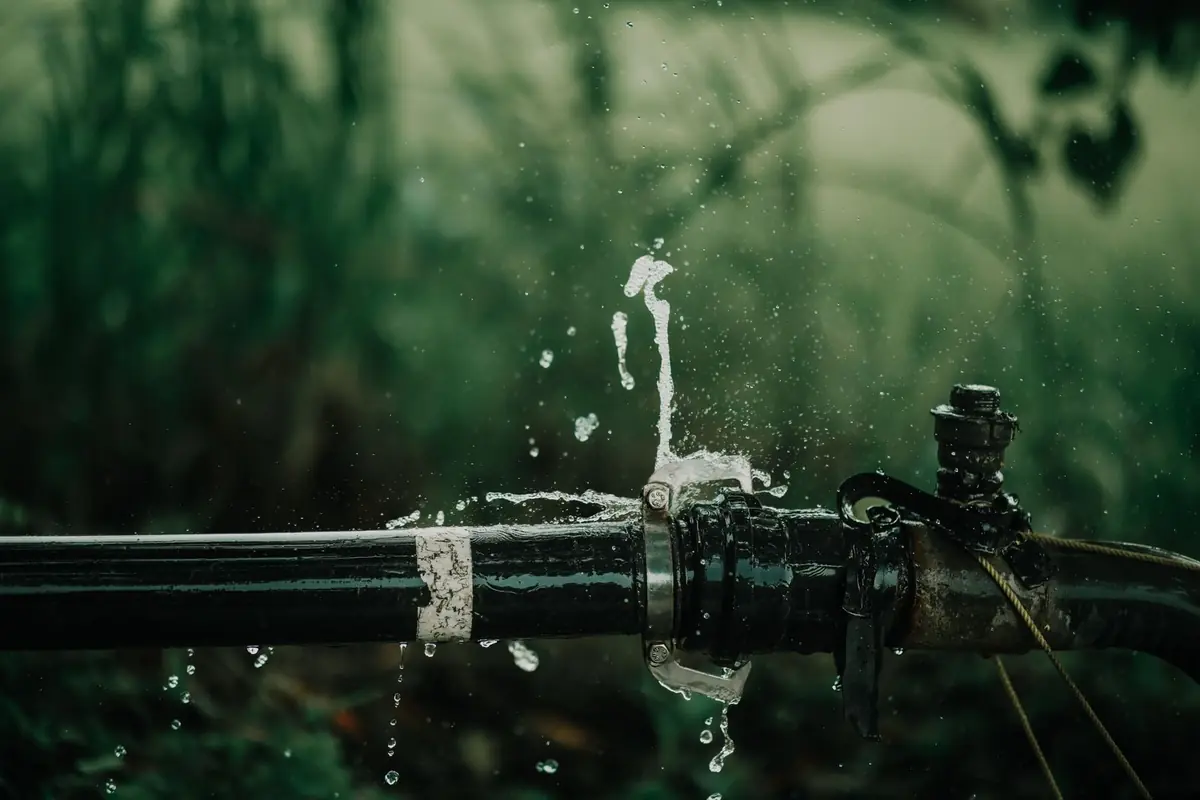
How Burst Pipe Damage Is Handled
From the shutoff to the dried room, the sequence runs:
- The water is shut off and the break located, with moisture meters and, for slab leaks, listening and pressure testing arranged through the plumber.
- The pipe repair is sequenced first, a plumber fixes the line (or caps it safely) so drying never seals a live leak inside a wall.
- Escaped water is extracted from floors, carpet, and cavities, including water that ran down inside walls to the rooms below.
- Wet cavities are opened only where readings say so, baseboards removed, small inspection openings made, so walls dry from the inside instead of rotting quietly.
- The structure is dried to measured standards, with daily readings at the exact points the moisture map flagged.
- Everything opened is closed back up, drywall, texture, paint, flooring, and trim restored once readings confirm the materials are dry.
Signs A Pipe Has Burst, Or Is Leaking Where You Can't See It
Some bursts announce themselves. These are the quieter signatures:
- A water bill that jumps sharply with no change in how the household uses water.
- The sound of water moving when every tap, toilet, and appliance is off.
- One oddly warm patch of tile or floor, a hot-water line leaking beneath the slab.
- A ceiling stain that keeps growing, or a wall patch that stays damp to the touch.
- Water pressure that has fallen off across the whole house over days or weeks.
- After a freeze: a tap that runs at a trickle, or no flow at all, on one line.
Slab Leaks: The Burst That Isn't
The under-slab leak deserves its own section because it breaks the pattern of every other burst: there is no event. A line under the concrete begins weeping, opened by corrosion, or by the clay's slow seasonal movement, and the escaping water takes the path of least resistance along the slab's underside, sometimes for months. Detection is its own discipline: a meter test confirms the loss, then acoustic listening equipment and, where useful, thermal imaging narrow the location before any concrete is opened. Guessing wrong about a slab leak's location is expensive, which is why the listening comes before the saw.
Repair routes are the plumber's scope, but homeowners meet three options: a spot repair through the slab at the located break; a reroute, abandoning the buried section and running a new line through walls or the attic; or, where lines are failing as a system, repiping. Reroutes are popular on Sherman slab homes precisely because they take the line out of the moving clay for good. The restoration side coordinates with whichever route is chosen, the drying plan and the floor restoration are built around the repair, and nothing is closed up until the new line has been pressure-tested and the old one proven dead.
Related Guides
From our water damage guides, the homeowner side of this service, in plain language:
What To Do In The First Hour After A Pipe Bursts
The first hour after a burst pipe decides how much of your home gets wet. Shutoff, safety, moving what matters, and the photos your insurer will want, in order.
Read the guide →Protecting Your Pipes Before A North Texas Hard Freeze
Sherman homes are plumbed for mild winters, and most winters bring a hard freeze anyway. The preparation checklist: insulation, sealing, shutoffs, and the cold-snap routine.
Read the guide →Questions & Answers
Do Pipes Really Burst In Texas?
Regularly. Sherman's January average lows sit around freezing, and most winters bring at least one stretch of hard, multi-day cold. Homes here are often built with lines in attics and exterior walls that would be protected differently in colder states, which is exactly why a North Texas freeze splits so many pipes, and why the February freeze pattern is a standing topic in our freeze preparation guide.
Who Fixes The Pipe Itself?
A plumber. The restoration contractor's job is the water damage: extraction, drying, and putting the room back. In practice the two are coordinated, the contractor can work around the plumber's repair, and drying equipment is placed once the line is sound. If you already have a plumber you trust, that works too; sequencing is what matters.
Is Burst Pipe Damage Covered By Insurance?
Sudden and accidental discharge, a pipe that bursts, is one of the more commonly covered water events under homeowners policies, while slow, long-running leaks are treated differently. Your insurer makes that call; the contractor's role is prompt mitigation and thorough documentation, both of which any claim depends on.
How Long Does The Whole Thing Take?
The plumbing repair is usually measured in hours. Extraction is typically a day or less. Drying runs several days with daily checks, longer where water got under a slab or deep into wall assemblies. Full restoration follows once materials verify dry, and the contractor will lay out that timeline after the first moisture map.
How Do I Keep It From Happening Again Next Freeze?
Insulate exposed lines, seal the gaps where cold air reaches pipes, know your main shutoff, and follow the cold-snap routine, cabinet doors open, slow drips on vulnerable lines, outdoor faucets covered and hoses off. Our winter checklist walks through the whole list in order.
Related Services
Water Extraction & Removal
Standing water pumped and vacuumed out of floors, carpets, and crawlspaces, the step that limits every bit of damage after it.
About this service →Structural Drying & Dehumidification
Air movers and dehumidifiers placed to a plan, moisture readings taken daily, and materials dried to a measured standard, not a guess.
About this service →Ceiling & Wall Water Damage
Stains, sagging drywall, and bubbling paint from upstairs and overhead leaks, sources traced, wet assemblies dried or removed, rooms restored.
About this service →Frozen Pipe Water Damage
Pipes split by hard freezes, discovered at the thaw: escaped water extracted, cavities dried to a measured standard, rooms restored.
About this service →Water Damage Help Across Sherman
The same burst pipe cleanup work is done across Sherman, in West Sherman, where the housing stock shapes the job, and in Downtown & the Courthouse Square as well. See all Sherman service areas for the full picture of where our network works.