
Keep the division of labour straight, because it decides who you call for what. The ceiling and wall page on this site owns interior ceiling and wall damage generally, from any source above: attic water heaters, AC condensate, upstairs baths. This page owns the roof-origin case specifically, where the water came through the roof covering, flashing, or penetrations, and the critical first job is different: not just drying the ceiling, but proving where the roof let the water in, because drying under an unrepaired entry is a subscription, not a fix. Where the interior damage itself is your question, start with ceiling and wall water damage; where the roof is the suspect, start here.
Sherman roofs work hard. Composition shingles bake under North Texas sun, spring hail and wind work at their edges, and the flashing around chimneys, valleys, and vent stacks is asked to flex through hundred-degree summers and freezing winters on the same seams. Most roof leaks here are not holes; they are details: a lifted shingle tab, a cracked boot around a vent pipe, flashing that lost its seal at a wall junction, a valley carrying debris. Each admits water in quantities that vary with the wind, which is why roof leaks are famously intermittent, present in one storm, absent in the next, and why the tracing protocol below exists.
Attic behaviour decides how bad a roof leak gets. A well-vented attic dries a small entry between storms and can hide a failing flashing for a season, quietly rotting the deck edge at the entry the whole time. A poorly vented attic holds the humidity of every leak against the deck and framing, so the same gallon does three times the damage. When a roof leak is traced, the attic's ventilation is read as part of the evidence, and a homeowner fixing the entry without asking why the assembly stayed wet is solving the smaller half of the problem.
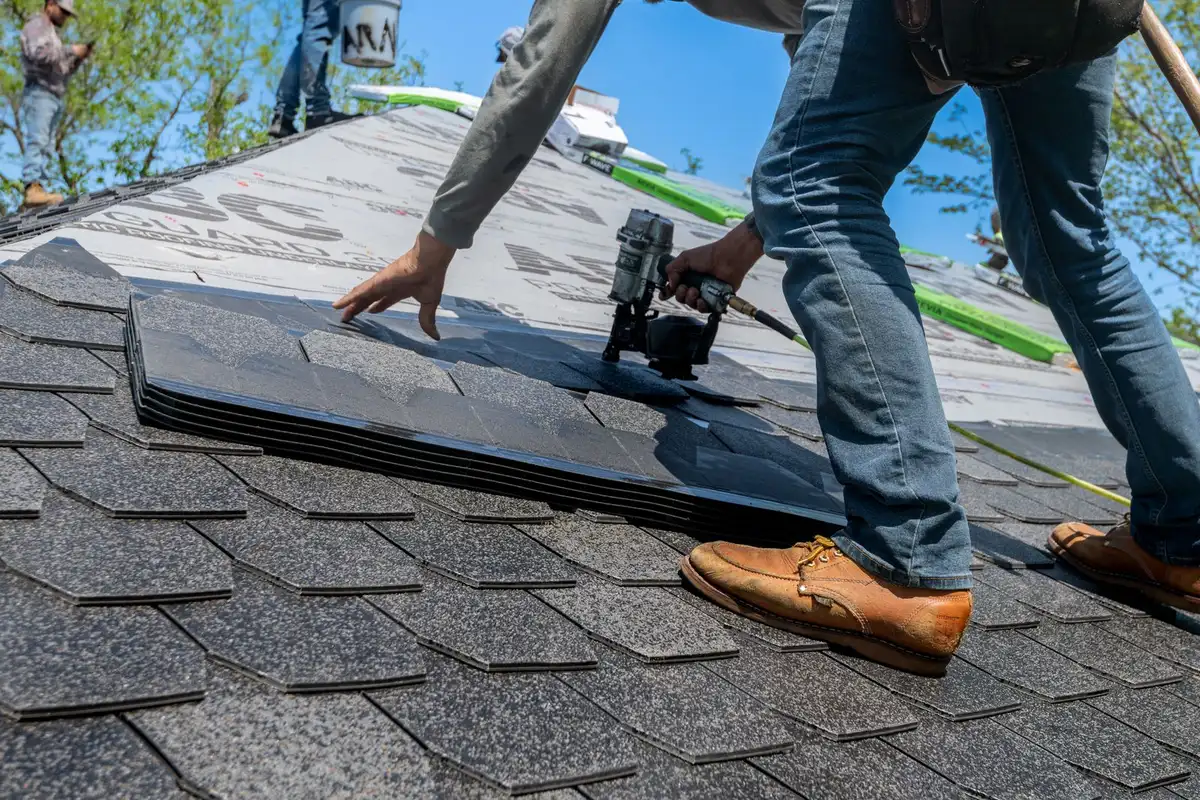
How Roof Leak Damage Is Handled
A roof-origin job is worked from the stain upward, in this order:
- The stain's story is read first, when it appears, in what weather, growing or stable, the pattern that separates roof entries from plumbing and condensate sources above the same ceiling.
- The attic is inspected along the water's likely route, decking undersides, rafters, and insulation checked for the wet trail that leads back to the entry.
- The entry point is identified for the roofer, shingle, flashing, boot, or valley, located as precisely as the evidence allows so the roof repair is aimed, not exploratory.
- Pooled water in the ceiling is relieved safely where the assembly is holding it, with the room below cleared, before weight does the job uninvited.
- Wet insulation is removed and cavities dried, directed air through the ceiling and wall assemblies the water crossed, verified with readings.
- Damaged materials are repaired or replaced, drywall, texture, and paint renewed once the assembly verifies dry and the roof above it is sound.
- The next rain is treated as the test, the repair and the dried assembly are checked after the first real weather, because a roof leak is only proven fixed by rain that stays outside.
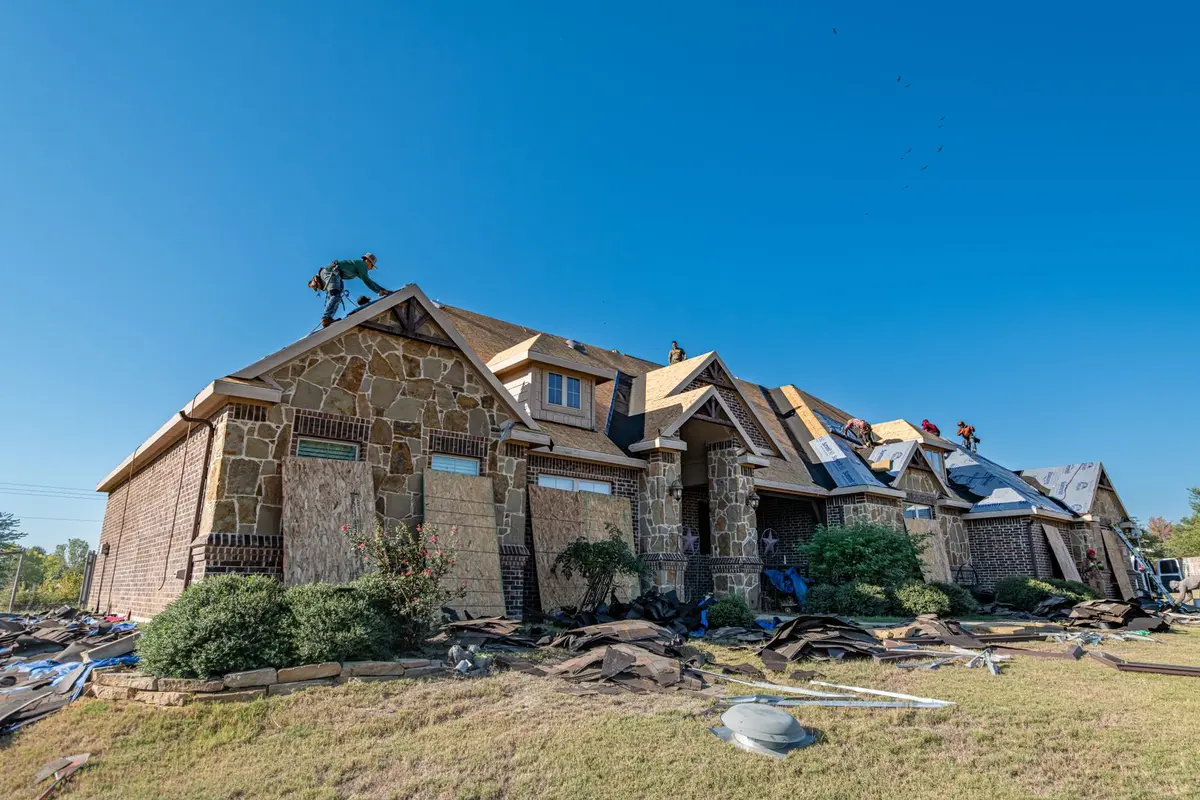
Signs The Leak Is Coming Through The Roof
Roof-origin water has a recognisable signature. Look for:
- A ceiling stain that appears or grows during or just after rain, and holds still in dry weather.
- Staining that tracks along a ceiling joist line or runs down an exterior wall from the top plate.
- Daylight, damp decking, or darkened wood visible in the attic around a vent, chimney, or valley.
- Shingle granules collecting in gutters and at downspout exits, the roof surface wearing away.
- A musty smell in the attic or top-floor rooms after wet weather that clears as things dry.
- Water that arrives only in wind-driven rain from one direction, the classic flashing and seal failure pattern.
The Usual Entries: Flashing, Boots, And Valleys
Roof leaks cluster at the interruptions. Vent stacks wear rubber boots that crack in the sun on a ten-to-fifteen-year cycle, and North Texas heat runs that clock fast. Chimney and wall-junction flashing depends on sealant and step flashing working together, and fails where one was asked to do both jobs. Valleys collect the debris that dams water sideways under shingle edges. Ridge and hip caps lift in wind and admit driven rain that vertical weather never finds. A tracing inspection that checks these four families first solves most Sherman roof leaks before it ever reaches for the unusual explanations.
Age sets the background rate. A composition roof in its third decade sheds granules, curls at the edges, and loses the sealant bond between tabs, so entries multiply and tracing turns into triage: which entries are active, which are imminent. At that point the honest conversation is about the roof as a system, a roofer's re-cover or replacement weighed against serial leak repairs, with the interior restoration sequenced after the roof decision rather than repeated under each new stain. The restoration contractor's moisture history of the house, which ceilings got wet and when, is genuinely useful evidence in that conversation.
Questions & Answers
The Stain Is Nowhere Near Where The Roof Looks Damaged. Why?
Because water travels before it drips. Entering at a flashing or shingle failure, it runs down the roof deck's underside or along a rafter until it finds a joint, a nail hole, or the low end of the run, sometimes several feet from the entry. That is why this page's protocol traces from the stain upward instead of assuming the entry sits above it, and why patching the roof directly over a stain so often misses.
Who Fixes The Roof Itself?
A roofer. The restoration contractor's job is the interior: tracing support, drying, and putting ceilings and walls back. Sequencing matters more than anything: interior finishes should not be closed until the roof repair above them is done and, ideally, rain-tested, and the contractor will say plainly if the staining pattern suggests the roof is still admitting water.
Is It The Roof, Or Something Else Above The Ceiling?
The weather test separates them. Stains that follow rain point to the roof; stains that grow in dry weather point to the attic's other residents, the water heater, AC condensate lines, or upstairs plumbing, which belong to our ceiling and wall water damage page. A stain that does both gets investigated as both, starting with readings in the attic.
Can The Ceiling Just Be Dried, Or Does It Have To Come Out?
Both outcomes are common, and readings decide. A ceiling that got wet once, briefly, with sound drywall and removable wet insulation above it, often dries in place with directed air. A ceiling that stayed saturated, sagged, or grew mold usually has to open. The decision is made from moisture readings and the board's condition, not from a rule, and the contractor explains which case yours is before anything is cut.
The Leak Only Happens In Heavy Storms. Can It Wait?
It is the worst kind to postpone, because each event adds a little more concealed damage: insulation that stays damp longer each time, decking edges softening at the entry, and a stain that quietly becomes a cavity problem. Intermittent leaks are also the hardest to trace once the trail goes cold, an inspection while the evidence is fresh is worth more than three after the next storm.
Related Services
Ceiling & Wall Water Damage
Stains, sagging drywall, and bubbling paint from upstairs and overhead leaks, sources traced, wet assemblies dried or removed, rooms restored.
About this service →Storm Damage Cleanup
Water damage from the storm itself: wind-driven rain and roof openings, water extracted, interiors sanitised and dried to standard.
About this service →Structural Drying & Dehumidification
Air movers and dehumidifiers placed to a plan, moisture readings taken daily, and materials dried to a measured standard, not a guess.
About this service →Water Damage Help Across Sherman
Wherever it happens in Sherman, the response is shaped by the building: the roof leak cleanup needed in Austin College Area is not identical to an West Sherman job. Read more on our service areas overview.