
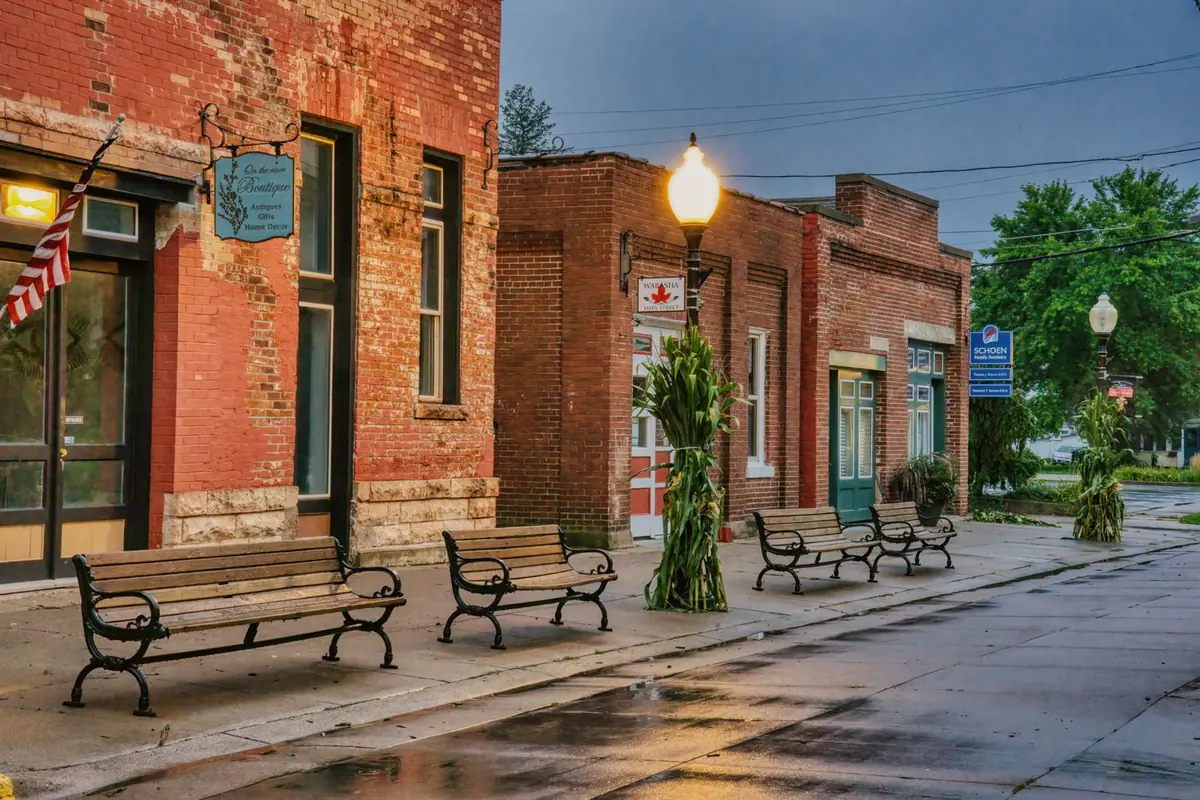
Downtown Sherman is organized around its courthouse square: the Grayson County Courthouse, built in 1936, faces streets of shops and antique stores along Travis Street, the performance halls at Kelly Square, and the Kidd-Key Auditorium in the Municipal Building, a district recognized as a Texas Cultural District. A few blocks out, Crockett Street's Heritage Row preserves the city's Victorian-era homes, including the C.S. Roberts House. This is the Sherman that existed before cars, and it was plumbed accordingly.
Those origins set the water damage profile. The homes around downtown are the city's oldest, Victorian-era houses and early-1900s builds standing on pier-and-beam foundations, with crawlspaces beneath them instead of slabs. Supply lines are galvanized steel in many of them and drain lines are cast iron, both at an age where corrosion is a question of when, not whether. A leak downtown rarely announces itself with a flood; it drips into a dark crawlspace for weeks while the floor above slowly softens.
The square's commercial buildings share the profile. The Travis Street storefronts and the offices around them were plumbed in the same generations as the houses, and several carry living space above the shop floor, which means a slow commercial leak downtown frequently presents first as a residential ceiling stain one storey down, and a residential backup can trace back to a line shared with the business next door.
Homes And Buildings Around The Square
- Victorian-era and early-1900s houses, including the Heritage Row homes on Crockett Street, pier-and-beam, with plumbing that has been repaired in sections over a century.
- Central Sherman's bungalows and cottages from the 1900s through the 1940s, smaller homes, often updated cosmetically while their supply and drain lines stayed original.
- Storefronts and offices around Travis Street and the square, some with living space above, a commercial leak downtown can be a residential ceiling problem one floor down.
- Mature oak and pecan canopy throughout, beautiful, and the source of the root pressure in the neighborhood's clay sewer laterals.
- Brick commercial buildings around the square itself, thick masonry walls that hide plumbing leaks until the moisture has somewhere undeniable to show.
Water Problems We See Downtown
- Crawlspace leaks that run unseen, a dripping joint under a pier-and-beam home can soak soil and floor framing for weeks before a soft spot or smell gives it away.
- Galvanized supply lines failing, pinhole sprays inside walls and full splits at corroded threads, often during or just after a freeze.
- Cast-iron drains and root blockages, clay laterals jointed for roots to enter; the result is the classic downtown sewage backup into the lowest tub.
- Freeze splits in crawlspaces and exterior walls, the least insulated plumbing in the city meets its hardest freezes here.
- Storm water at old thresholds, heavy rain against door sills, cellar entries, and low porches that were graded for a different century's rainfall.
- Shared and forgotten lines in mixed-use buildings, old connections between neighboring properties that nobody has mapped, discovered only when water crosses a wall it should never reach.
Downtown jobs most often pair burst pipe cleanup for the aging supply lines with sewage cleanup when a root-blocked lateral backs up. Whatever the source, the work starts the same way: find it in the crawlspace or the wall, stop it, and dry a structure that was built long before moisture meters existed. Downtown's density helps in one way, though: no address in the neighborhood is far from help once the call is made, and the contractors who work these streets know their crawlspaces by address range. Many downtown buildings also share party walls and a long plumbing history with their neighbors, and the good crews work that local knowledge into every assessment.
Questions Specific To Downtown Sherman
My Downtown Home Has Water Under It But None Inside. Is That Urgent?
Yes, crawlspace water is the quiet kind. It saturates the soil, feeds moisture into floor framing and subfloor from below, and invites exactly the conditions that rot a pier-and-beam floor system. It is pumped out, the source found, and the crawlspace dried as part of the same job; ignoring it because the living room looks dry is how floors end up replaced.
Can Restoration Work Respect An Older Home's Materials?
The contractors in our network work in Sherman's historic housing regularly and approach it plainly: remove only what water has genuinely ruined, dry what is sound, and document everything. Original hardwood, plaster, and trim that can be saved by drying is saved, demolition is the last resort, not the opening move.
Why Do Downtown Pipes Freeze More Than Newer Homes'?
Exposure. Pier-and-beam homes put supply lines in a ventilated crawlspace rather than inside a slab's thermal mass, and century-old walls were insulated to a different standard, where they were insulated at all. The same cold snap that a new subdivision shrugs off finds every gap around the square.