The Ground Sherman Is Built On
Sherman sits on the Blackland Prairie, whose deep clay soils are famous among farmers and infamous among foundation engineers. Clay of this type is expansive: it swells as it takes on water and shrinks as it dries, changing volume enough to lift and settle the edges of a slab with the seasons. North Texas adds the rhythm, wet springs, dry summers, so the ground under most Sherman homes is in slow, perpetual motion. A concrete slab is designed to ride that motion as a unit; the plumbing cast into and beneath the slab has to ride it too, and rigid pipe is not fond of riding anything.
This is the context for the slab home's characteristic water problems, and for why its drying behaves differently. The slab is not just the floor of the house, it is a participant in the water story.

How Water Moves Under And Through A Slab
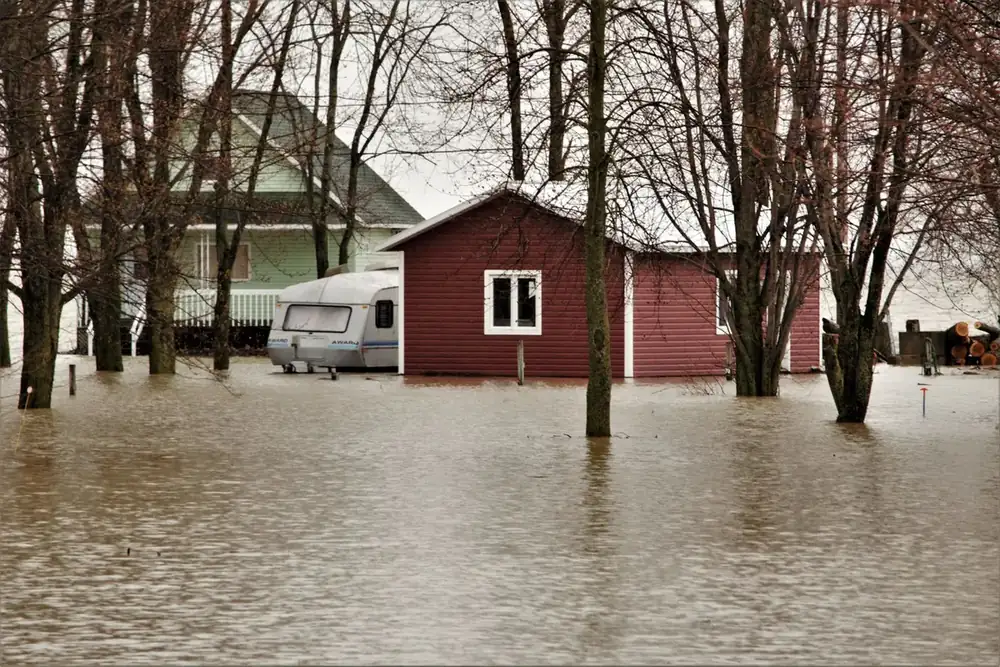
A leak under a slab, from a supply line stressed by soil movement, or a drain joint opened by the same, does not puddle visibly. The water travels along the slab's underside and through the granular fill beneath it, seeking level, sometimes surfacing rooms away from the break. Inside the house it appears as the classic trio: a warm patch where a hot line leaks, flooring that lifts or softens at a slab edge or joint, and a water bill testifying to a loss nobody can see. Storm water works the same geometry in reverse: pushed against the foundation, it finds the slab's cold joints and the gap at the wall base and enters along them, which is why flood cleanup on slab homes, the work of flood and slab-leak cleanup, includes the perimeter as a system, not just the wet rooms.
Once water is in a slab home, the slab manages the moisture for months if left alone: concrete absorbs water and releases it slowly upward, feeding flooring adhesives and wall bases long after the surface story ended.
Why Drying A Slab Home Is Different
A pier-and-beam home can be dried from below, air through the crawlspace, ground cover checked, framing open to inspection. A slab home offers no below. Drying works from above and from the perimeter: directed air at wall bases where moisture wicks up, flooring decisions made from moisture readings (some floors dry in place over a slab; swollen or bonded-down products that trap moisture against the concrete often cannot), and patience with the slab itself, which equilibrates on a schedule of weeks while the rooms above it return to use.
The failure mode to avoid is sealing a still-damp slab under new impermeable flooring. The moisture has nowhere to go but sideways and up, into wall bases and adhesives, and it announces itself months later as lifting floors and musty baseboards. Verified readings before flooring goes down are the whole defense, and they cost little compared with doing the floor twice. The pipe side of the same story, how clay movement breaks the lines in the first place, is covered in our guide to burst pipe damage under slabs and its prevention cluster-mate.
The Signs A Slab Home Gives You
- A water bill with no explanation, the meter is the first instrument that notices an under-slab leak.
- A warm or cool patch of floor that maps to no vent or sunlight, water from a leaking line changes the slab's surface temperature locally.
- Flooring lifting, cupping, or clicking hollow along one run of rooms, moisture working up through the slab beneath it.
- Doors that seasonally stick, then free, then stick, the slab moving on its clay, the same motion that stresses the pipes.
- A musty line at baseboard height after storms, perimeter water finding the wall base along the slab edge.
None of this makes slab construction a mistake, it is the right foundation for this region's economics and it serves most Sherman homes for decades. It simply has its own water physics, and working with them, meter watched, signs read early, drying verified before floors close, is what keeps a slab home's problems small. For the flood side of the same ground, our after-the-storm cleanup order picks up where the water comes over the slab rather than under it.
The contrast with Sherman's other foundation is instructive. A pier-and-beam home near downtown hides its leaks in a crawlspace but offers them up to inspection, you can get under the house and look. A slab home shows nothing and offers nothing; its evidence is instrumental: the meter, the bill, the warm spot, the listening equipment. Neither foundation is more honest, they simply testify differently, and the homeowner's skill is knowing which kind of testimony their house gives.
That is also why documentation matters when Sherman homes change hands. A slab home with a dried-to-standard moisture log and a rerouted line has a story that reassures; a slab home with a patched floor and no paperwork has a question mark poured into it. Keep the records of any water work with the house's papers. In a city built on clay, they are part of the deed's supporting cast.
When the instrumental evidence says a line under the slab is losing water, the response has its own page: slab leak cleanup walks through the meter test, the acoustic detection that pins the break before any concrete opens, the spot-repair-versus-reroute decision, and the monitored drying that follows the fix.